我们知道, Go语言为并发编程提供了简洁的编程方式, 你可以以"同步"的编程风格来并发执行代码, 比如使用go关键字新开一个goroutine。 对于网络编程,Go标准库和运行时内部采用 epoll/kqueue/IoCompletionPort来实现基于 event-loop的网络异步处理,但是通过netpoll的方式对外提供同步的访问。具体代码可以参考 runtime/netpoll 、net 和internal/poll 。
Package poll supports non-blocking I/O on file descriptors with polling.
当然,我们平常不会设计到这些封装的细节,正常使用net包就很方便的开发网络程序了, 但是,如果我们想自己实现基于epoll的 event-loop网络程序呢?
基于epoll的简单程序 man epoll可以查看epoll的相关介绍。下面这个例子来自tevino , 采用edge-triggered方式处理事件。
它采用 syscall.Socket、syscall.SetNonblock、syscall.Bind、syscall.Listen系统调用来监听端口,然后采用syscall.EpollCreate1、syscall.EpollCtl、syscall.EpollWait来关联这个监听的file descriptor, 一旦有新的连接的事件过来,使用syscall.Accept接收连接请求,并对这个连接file descriptor调用syscall.EpollCtl监听数据事件。一旦连接有数据ready, 调用syscall.Read读数据,调用syscall.Write写数据。
来自https://gist.github.com/tevino/3a4f4ec4ea9d0ca66d4f 1 2 3 4 5 6 7 8 9 10 11 12 13 14 15 16 17 18 19 20 21 22 23 24 25 26 27 28 29 30 31 32 33 34 35 36 37 38 39 40 41 42 43 44 45 46 47 48 49 50 51 52 53 54 55 56 57 58 59 60 61 62 63 64 65 66 67 68 69 70 71 72 73 74 75 76 77 78 79 80 81 82 83 84 85 86 87 88 89 90 91 92 93 94 package mainimport ( "fmt" "net" "os" "syscall" ) const ( EPOLLET = 1 << 31 MaxEpollEvents = 32 ) func echo (fd int ) defer syscall.Close(fd) var buf [32 * 1024 ]byte for { nbytes, e := syscall.Read(fd, buf[:]) if nbytes > 0 { fmt.Printf(">>> %s" , buf) syscall.Write(fd, buf[:nbytes]) fmt.Printf("<<< %s" , buf) } if e != nil { break } } } func main () var event syscall.EpollEvent var events [MaxEpollEvents]syscall.EpollEvent fd, err := syscall.Socket(syscall.AF_INET, syscall.O_NONBLOCK|syscall.SOCK_STREAM, 0 ) if err != nil { fmt.Println(err) os.Exit(1 ) } defer syscall.Close(fd) if err = syscall.SetNonblock(fd, true ); err != nil { fmt.Println("setnonblock1: " , err) os.Exit(1 ) } addr := syscall.SockaddrInet4{Port: 2000 } copy (addr.Addr[:], net.ParseIP("0.0.0.0" ).To4()) syscall.Bind(fd, &addr) syscall.Listen(fd, 10 ) epfd, e := syscall.EpollCreate1(0 ) if e != nil { fmt.Println("epoll_create1: " , e) os.Exit(1 ) } defer syscall.Close(epfd) event.Events = syscall.EPOLLIN event.Fd = int32 (fd) if e = syscall.EpollCtl(epfd, syscall.EPOLL_CTL_ADD, fd, &event); e != nil { fmt.Println("epoll_ctl: " , e) os.Exit(1 ) } for { nevents, e := syscall.EpollWait(epfd, events[:], -1 ) if e != nil { fmt.Println("epoll_wait: " , e) break } for ev := 0 ; ev < nevents; ev++ { if int (events[ev].Fd) == fd { connFd, _, err := syscall.Accept(fd) if err != nil { fmt.Println("accept: " , err) continue } syscall.SetNonblock(fd, true ) event.Events = syscall.EPOLLIN | EPOLLET event.Fd = int32 (connFd) if err := syscall.EpollCtl(epfd, syscall.EPOLL_CTL_ADD, connFd, &event); err != nil { fmt.Print("epoll_ctl: " , connFd, err) os.Exit(1 ) } } else { go echo(int (events[ev].Fd)) } } } }
上面的基于epoll只是一个简单的event-loop处理原型,而且在有些平台下(MAC OS)也不能执行,事件的处理也很粗糙,如果你想实现一个完整的event-loop的网络程序, 可以参考下节的库。
evio evio 是一个性能很高的event-loop网络库,代码简单,功能强大。它直接使用 epoll和kqueue系统调用,除了Go标准net库提供了另外一种思路, 类似libuv 和libevent 。
这个库实现redis和haproxy等同的包处理机制,但并不想完全替代标准的net包。对于一个需要长时间运行的请求(大于1毫秒), 比如数据库访问、身份验证等,建议还是使用Go net/http库。
你可能知道, 由很多基于event-loop的程序, 比如Nginx、Haproxy、redis、memcached等,性能都非常不错,而且它们都是单线程运行的,非常快。
这个库还有一个好处, 你可以在一个event-loop中处理多个network binding。
一个简单的例子:
1
2
3
4
5
6
7
8
9
10
11
12
13
14
package mainimport "github.com/tidwall/evio" func main () var events evio.Events events.Data = func (id int , in []byte ) byte , action evio.Action) { out = in return } if err := evio.Serve(events, "tcp://localhost:5000" , "tcp://192.168.0.10:5001" , "tcp://192.168.0.10:5002" ,"unix://socket" ); err != nil { panic (err.Error()) } }
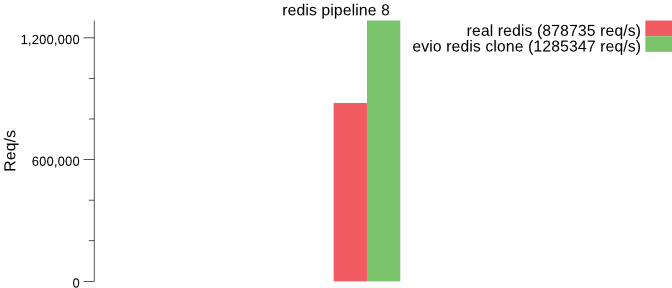
作者对性能做了对比,性能非常不错。